Bees are four-winged, flower-feeding insects with
enlarged hind feet, branched or feathered body
hairs, and generally a stinger. Honey bees and
bumble bees are the most common with the bumble bee
being larger and stronger.
The rapid wingbeats of bees create wind vibrations that
humans hear as buzzing. The larger the bee, the slower
the wingbeat resulting in a lower pitch of the buzz.
Other vibrations that cause the buzzing sounds are a
result of the bees pulsating their wing muscles while
shaking pollen off the flowers onto the bee’s body to be
deposited on the next flower that is visited.
The bee brushes any remaining pollen into pollencarrying
structures located on the mid-segments of its
legs called a pollen basket and often referred to as “bee’s
knees.” They then carry that pollen back to the hive to
nurture the family and to aid in the manufacture of honey.
Bees are sociable and relatively extroverted; they will
invite lone bees to join their commune. Honeybees live
in hives or colonies that may contain 20,000 to 100,000
bees.
Hives include one queen that creates all the broods
for the hive (up to 1,500 eggs a day), hundreds of male
drones, and thousands of female worker bees. The worker
bees must visit several thousands of flowers a day to make
a tablespoon of honey.
Research shows that about one-third of the human diet
comes from insect pollinated plants. Those pollinators -
bees, butterflies and moths - are responsible for one out
of every three bites of food that we ingest.
They also help to repopulate other plants, adding to the
diversity of the environment that benefits the ecosystem
making it more resilient.
Unfortunately, these pollinators have been in a decline
for many years. The uncomplicated action of sowing seeds
can be a powerful and crucial deterrent to that disastrous
trend. We can easily create habitats that protect and feed
those pollinators thus strengthening their populations.
The phenomenon called “hive collapse” in which large
numbers of bees suddenly disappear has been a widely
46 discussed issue since 2006 as beekeepers noticed the loss
of bee colonies. Some researchers attribute the problem
to mites and insect diseases while others attribute it to
environmental change, malnutrition and pesticides.
Another theory indicates that the numbers of bees have
steadily declined because their genes do not equip them
to fight poisons and disease when they are exposed to
ailments that other insects may carry.
Bees have been known to travel more than four miles to
collect pollen and nectar. They communicate by a process
called the “waggle dance” where a bee indicates the
location of food sources to other bees. Most bees gather
pollen from a variety of plants while some “specialists”
prefer collecting from plants with floral oils or those with a
particular aromatic compound.
Bee keeping has become a profitmaking industry and a
popular hobby throughout the world with many beekeepers
maintaining substantial numbers of hives, harvesting the
honey for commercial sale or, in the case of “yard bees”
where a hobbyist will look after one or two hives, selling his
honey locally in a kind of cottage-industry approach.
It has been noted that some ten thousand years ago,
humans attempted to maintain colonies of bees using
hollow logs, wooden boxes, and woven baskets until better
understanding of bee biology and habits allowed the
construction of moveable comb hives so honey could be
harvested with no damage to the colony itself.
Thirty intact hives were found in an archeological site in
the ruins of a city from 900 BCE. As many as one hundred
hives made of straw and unbaked clay were placed in
orderly rows that may have accommodated more than a
million bees with a certain potential annual yield of 1,100
pounds of honey. This discovery was evidence that an
advanced honey industry existed in ancient Israel more than
3,000 years ago.
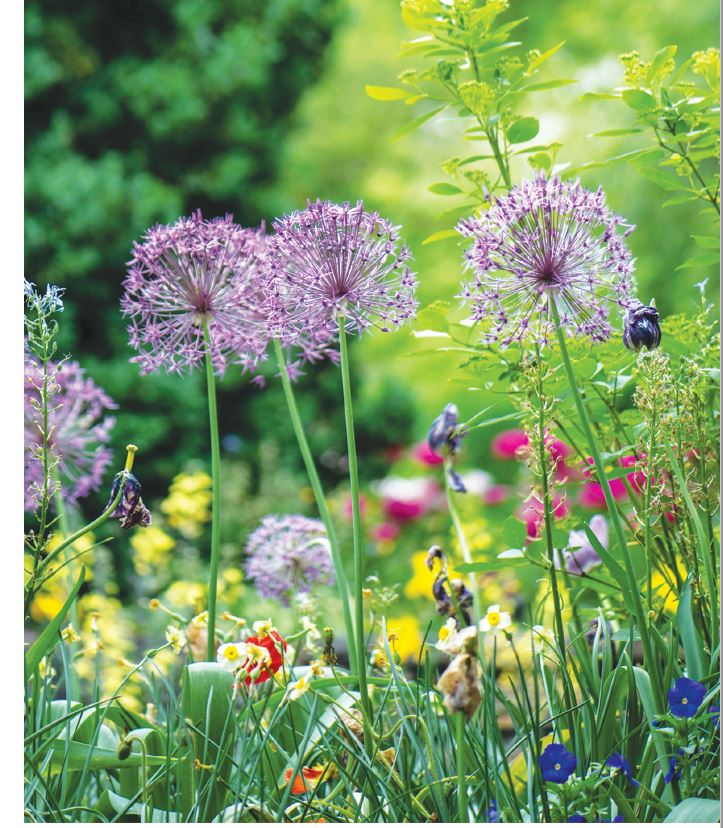 Of the thousands of bee species known to exist, honey
bees are for many reasons the pollinator of choice for most
North American crops. The honey bee is responsible for
eighty percent of the fertilization of food crops and they
pollinate other types of plants too. They are known to visit
the same plant repeatedly and will recruit other bees to visit
those plants, all to our benefit.
Of the thousands of bee species known to exist, honey
bees are for many reasons the pollinator of choice for most
North American crops. The honey bee is responsible for
eighty percent of the fertilization of food crops and they
pollinate other types of plants too. They are known to visit
the same plant repeatedly and will recruit other bees to visit
those plants, all to our benefit.
Among the plants that honey bees favor are apples, nuts,
avocados, soybeans, and asparagus as well as broccoli,
celery, squash, and cucumbers. They also pollinate citrus
trees and many fruits like peaches, kiwi, blueberries,
cranberries, strawberries, cantaloupe, and other melons.
Creating a Bee-Friendly Garden by employing a few simple tips in our home gardens, we
can assist the bees in their quest to continue to feed the
world.
Choose native species when determining what to plant in
your home garden. Native bees and other pollinators are
adapted to native plants in both their behaviors and in their
physical traits, and the plants need them as well.
Make sure your garden is in bloom all year round. Grow a variety of plants that will bloom across the seasons from
early spring thru fall so that pollen and nectar are always
available. Varied bloom shapes and color will attract a wider
variety of pollinators.
Only use non-toxic pest control and avoid using pesticides
in your garden. Pesticides may be absorbed by the plant
tissue and become present in all parts of the plant, including
the nectar and pollen. Bees, butterflies, and other flowerhopping
insects are harmed by the residues.
Avoid modern cultivars or hybrids, especially the “doubleblooms”
which can be changed in scent, shape or even color
just enough that pollinators can’t recognize them or access
the nectar.
Include host plants to attract more bees to your garden
that are rich in nectar and pollen. Bees are especially
attracted to alyssum, zinnias, asters, sunflowers, and even
culinary herbs like sage, thyme, lavender, dill and mint.
Select more colorful plants and a wide variety of flowers.
Bees, like humans and most other animals, can see in color
and are attracted to colorful plants and flowers.
Provide a source of water such as a shallow birdbath with
stones in it, or some bare ground that is kept moist. All bees
and butterflies need water, and they seek shallow water
sources.
Create and protect nesting opportunities for native
bees. Bumble bees construct nests in cavities, using either
existing underground cavities, or cavities under spent or
fallen plant material. Wood-nesting bees build their nests
inside hollow tunnels in dead tree limbs and hollow plant
stems. Ground nesting native bees need direct access to the
soil surface, often on sloped or well-drained sites.